Everything between idea and
verified construct.
Five everyday lab frustrations, retired — one by one.
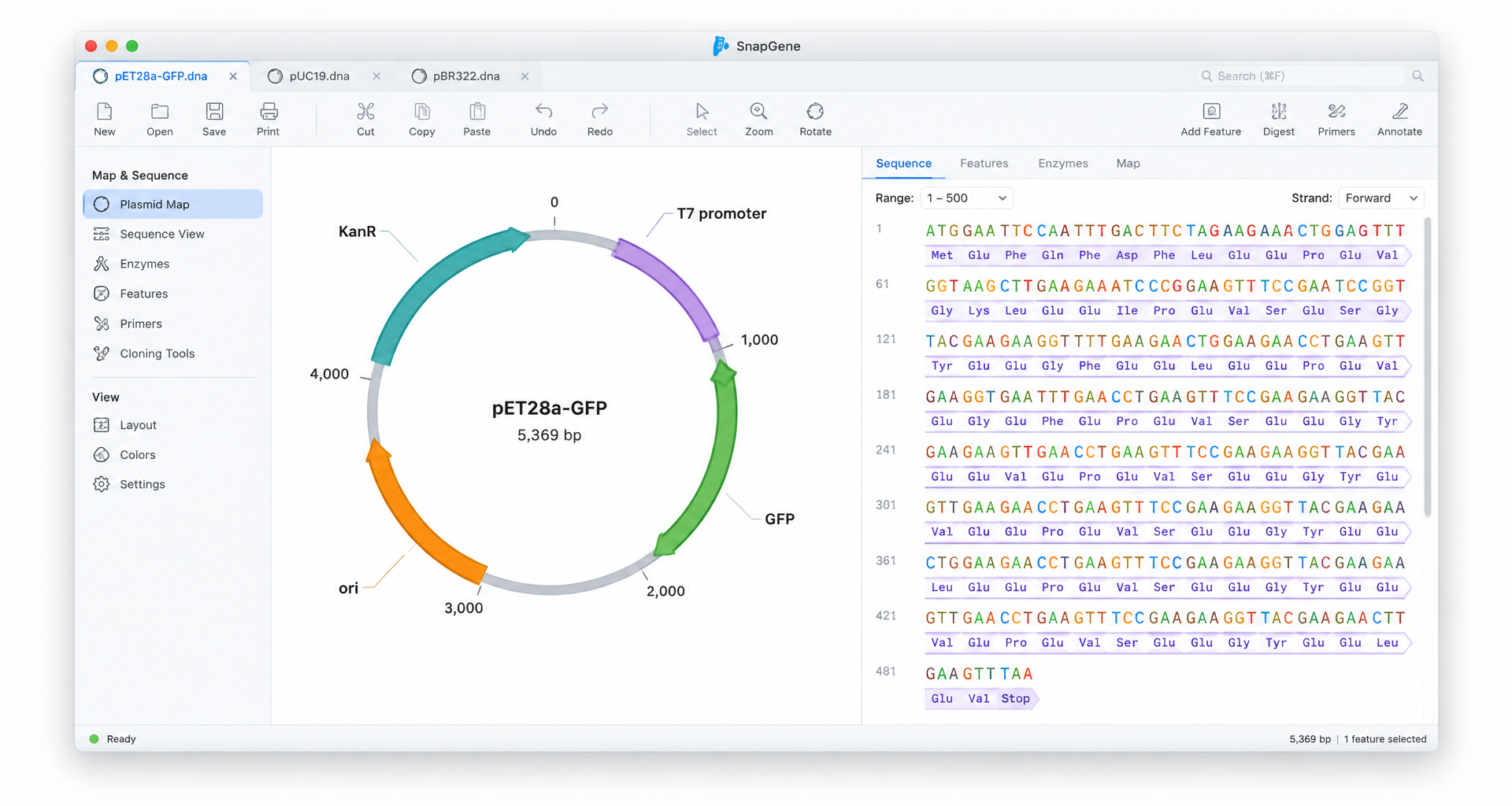
Clone once. Get it right.
One wrong primer ends a week. SnapGene simulates the full workflow — restriction, Gibson, Golden Gate, In-Fusion — and shows exactly what your construct will look like before you order a single oligo.
- Automatic primer design with melting-temperature checks
- Restriction site finding across hundreds of enzymes
- Clean assembly simulation with fragment-by-fragment validation
See the gel before you run it.
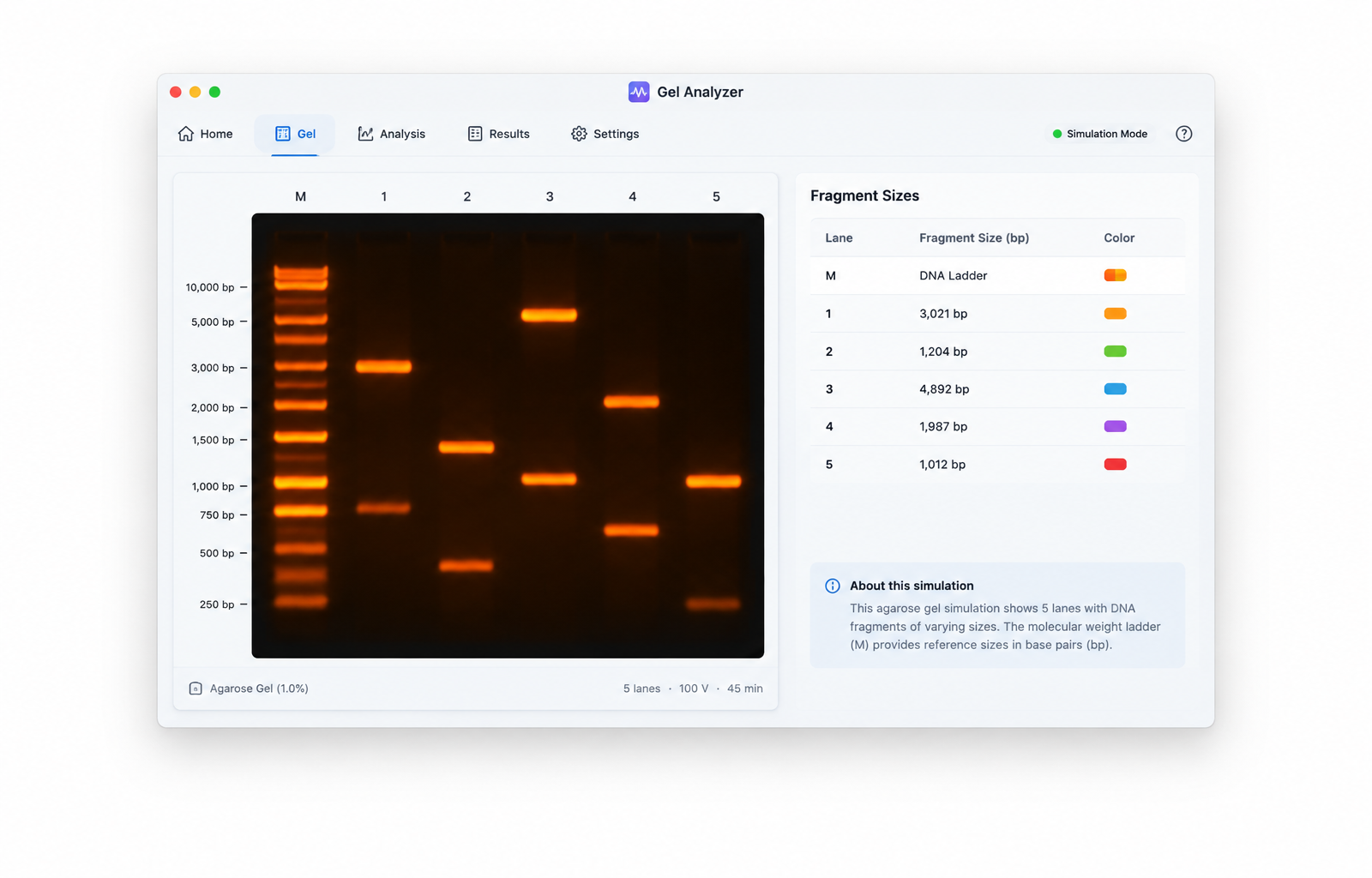
No more waiting 45 minutes to discover you amplified the wrong fragment. Simulate PCR and restriction digests, then preview the agarose gel — bands, sizes, and all.
- Predicted fragment sizes, verified against your design
- Adjust agarose %, voltage, and run time
- Catch mis-sized products while the design is still on screen
Confirm your construct in minutes, not runs.
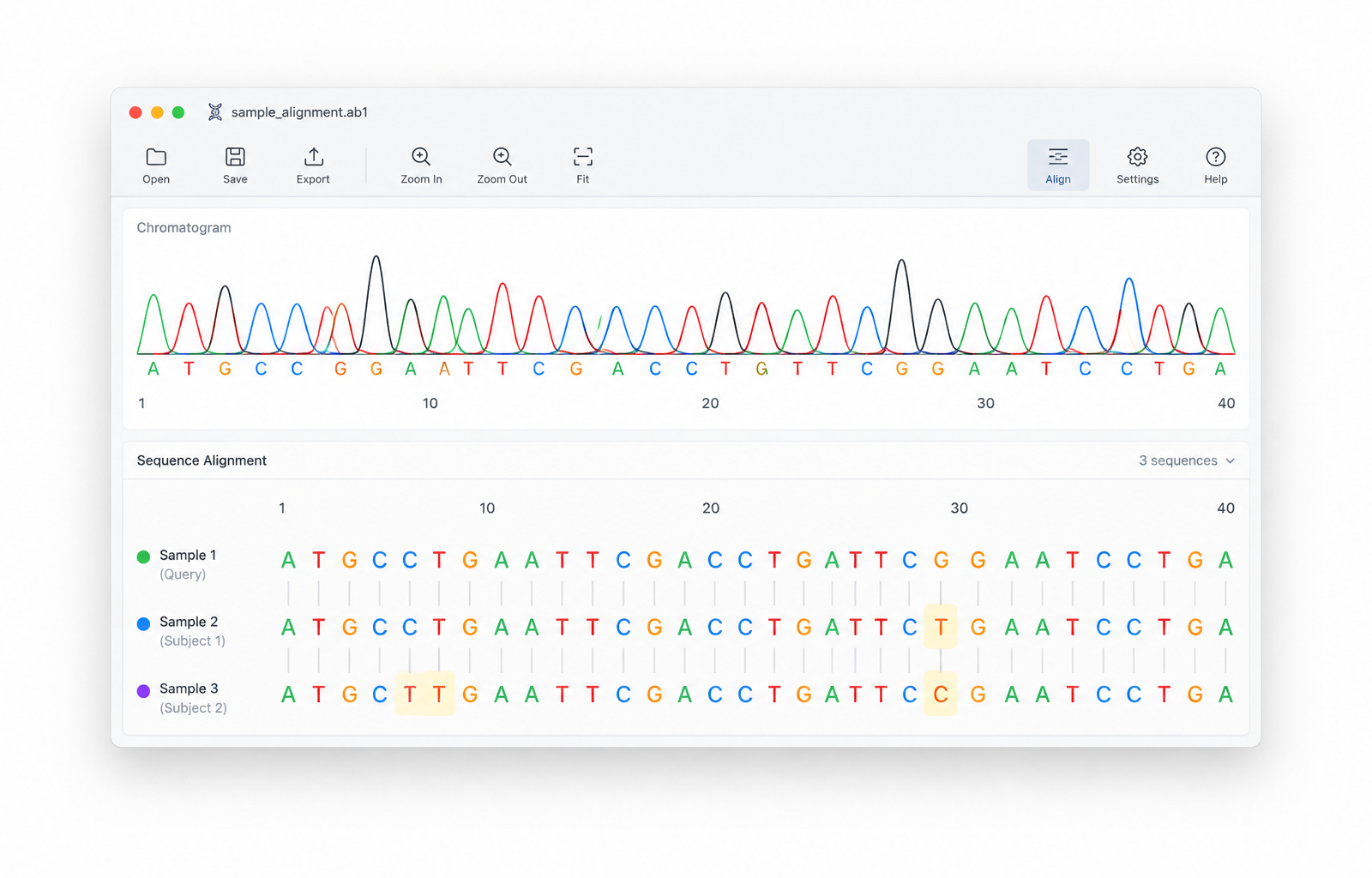
Import chromatograms and SnapGene assembles the reads against your reference automatically. Every mismatch is highlighted with its evidence on screen — the verification your paper needs, without the spreadsheet archaeology.
- Native .ab1 support with clean trace rendering
- Multi-read assembly with overlap detection
- Mismatch table ready to screenshot for reviewers
Maps your whole lab can read.
A plasmid map should answer questions, not raise them. SnapGene maps are annotated automatically — promoters, ORFs, restriction sites — and render identically on every colleague's screen. Shareable in one click, readable by anyone.
- Automatic feature annotation from the sequence itself
- Publish-ready views for slides and figures
- Free viewer files — collaborators don't need a license to look
From gene to protein, without switching tools.
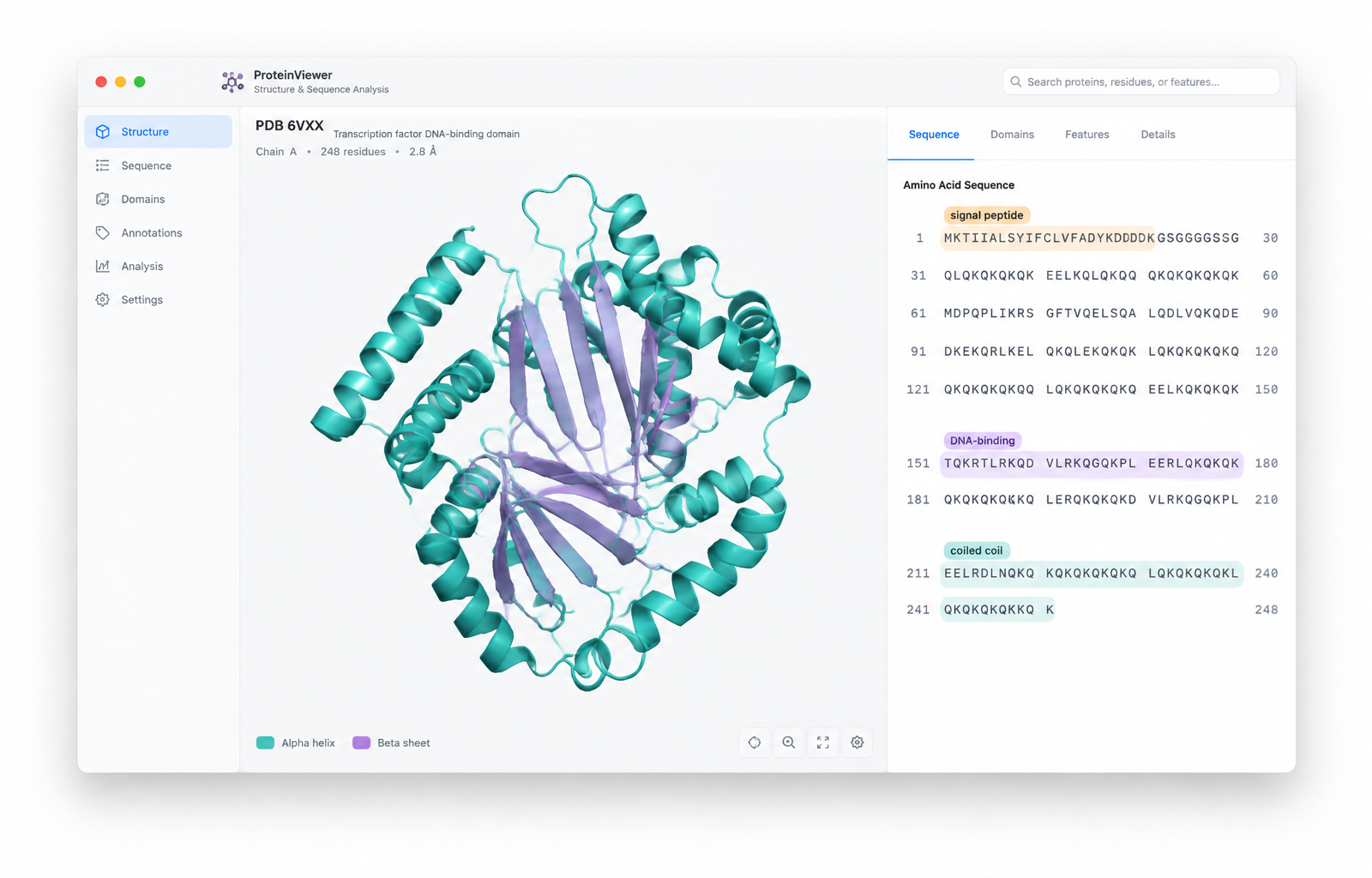
Translate any sequence in six frames, inspect domains and secondary structure, and see the protein your construct will express — next to the DNA that encodes it.
- Six-frame translation with codon usage context
- Domain and feature annotation on the amino acid sequence
- One workflow from plasmid to protein